Data Governance in the Age of AI: Who Owns the Training Set?
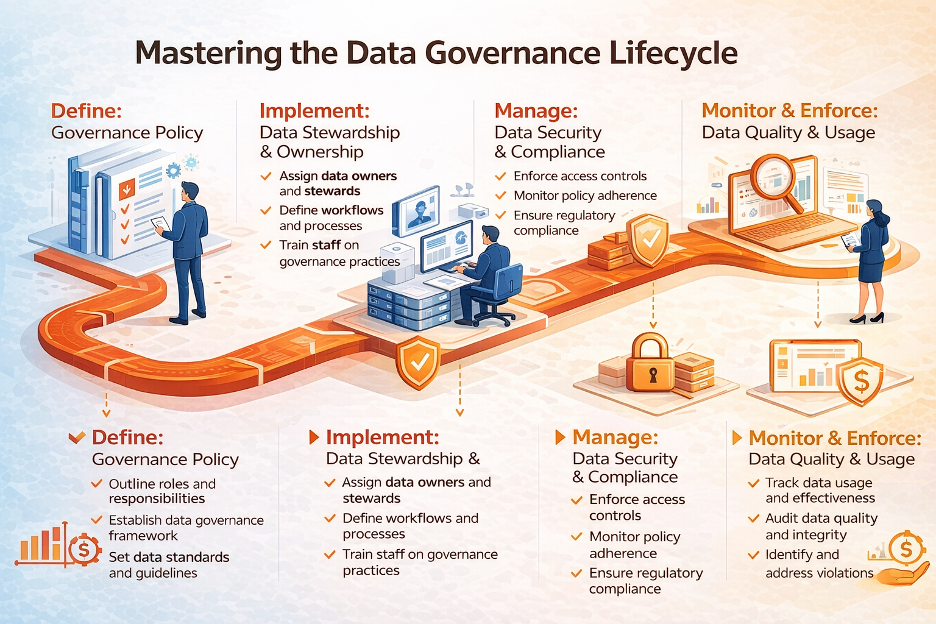
Gartner predicts 80% of governance initiatives will fail by 2027. A 2025 survey found 70% of CDAOs now own AI strategy. The discipline has been permanently redefined and the regulatory clock is ticking.
Data governance used to mean metadata catalogs, data stewards, and access control lists. In 2026, it means governing not just the data, but the decisions that data trains, influences, and automates. The EU AI Act, US Executive Order on AI, and statelevel privacy laws have redefined the stakes and the accountability is landing squarely with the Chief Data Officer.
"The question is no longer just who can access this data it's what decisions can this data make, and are we accountable for them?"
The Governance Failure Rate
Gartner predicts 80% of data governance initiatives will fail by 2027, primarily because they lack connection to business outcomes or are driven by crisis rather than strategy. Programs that focus on data hygiene and control rather than enabling business value face stakeholder disengagement and budget cuts. Gartner's definition of data governance is precise: "the specification of decision rights and an accountability framework ensuring appropriate behavior in data valuation, creation, consumption, and control."
The CDAO's Expanded Mandate
A 2025 Gartner CDAO Agenda Survey of 504 data and analytics leaders worldwide found that 70% of Chief Data and Analytics Officers now bear primary responsibility for building their organization's AI strategy and operating model. A separate 2024 Gartner survey found